
Types of Hinges: A Complete Guide to Styles, Uses, and Mechanisms
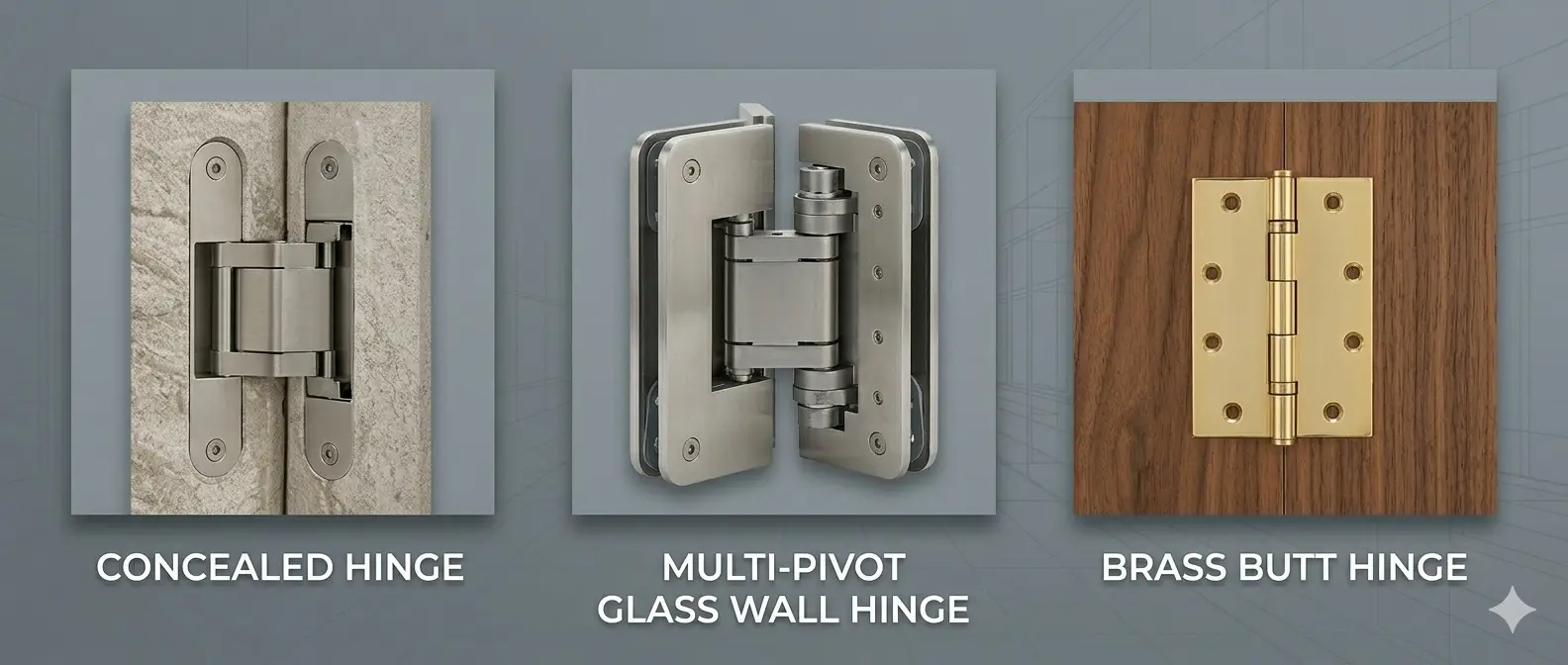
When you open a door, flip up a jewelry box lid, or swing wide a heavy garden gate, you are witnessing the quiet, essential work of a hinge. While they are often overlooked as simple hardware, the types of hinges available today are remarkably diverse, each engineered to handle specific weights, aesthetic requirements, and movement patterns.
Choosing the right hinge is the difference between a door that glides effortlessly and one that sags, squeaks, or fails to close. In this comprehensive guide, we will explore the various types of mechanical hinges, how they work, and which ones are best suited for your next woodworking or home improvement project.
Understanding Hinge Mechanisms: How Do They Work?
At its core, a hinge is a mechanical bearing that connects two solid objects, typically allowing only a limited angle of rotation between them. Most hinges consist of two "leaves" held together by a "pin." One leaf is attached to a fixed component (like a door frame), while the other is attached to the moving part (the door).
However, types of hinge mechanisms have evolved far beyond the basic pin-and-leaf design. Modern engineering has introduced specialized movements to solve specific architectural problems:
- Pivot Mechanisms: Where the rotation happens at a single point, often at the top and bottom of a door rather than the side.
- Geared Mechanisms: Used in heavy-duty continuous hinges to distribute weight evenly across the entire length of a frame.
- Spring-Loaded Mechanisms: Designed to automatically return a door to a closed or open position using internal tension.
- Concealed/European Mechanisms: Utilizing complex linkages to hide the hardware entirely when the door is closed.
Common Types of Hinges and Their Uses
1. Butt Hinges
The butt hinge is the most common variety found in residential and commercial architecture. It consists of two matching leaves joined by a central pin. These are typically "mortised" or recessed into the door and the frame so that they sit flush.
- Best for: Interior and exterior doors, sturdy cabinets, and large casement windows.
- Butt hinge types: You will find plain-bearing versions for light doors and ball-bearing versions for heavy, high-traffic entryways.
2. Barrel Hinges
If you are working on a high-end woodworking project where you want the hardware to be completely invisible, barrel hinges are the answer. These are cylindrical and fit into holes drilled directly into the wood.
- Uses: Small jewelry boxes, folding screens, and fine furniture.
- Mechanism: They offer a 180-degree opening range but are not designed for heavy load-bearing.
3. Pivot Hinges
Unlike standard hinges that attach to the side of a door, pivot door hinges are mounted at the top and bottom. It enables the door to rotate around a vertical pivot point.
- Uses: Large, heavy "statement" front doors or "secret" bookcase doors.
- Variations: You may encounter spring-loaded pivot hinges, which are excellent for café-style swinging doors that need to center themselves after use.
Specialized Cabinet Hinges
When it comes to kitchen and bathroom cabinetry, the aesthetic requirements change. Homeowners often prefer "invisible" hardware, leading to a massive market for types of concealed hinges for cabinets.
European (Concealed) Hinges
These are the gold standard for modern cabinetry. Different types of concealed hinges offer 3-way adjustability, allowing you to move the door up/down, left/right, and in/out even after installation.
- Soft Close Hinge Types: Many concealed hinges now feature integrated hydraulic dampers. This prevents the door from slamming, protecting the cabinet carcass and reducing noise.
- In-set vs. Overlay: Depending on whether your door sits inside the frame or covers it, you will choose specific "cranked" versions of these hinges.
Glass Door Hinges
Working with glass requires specialized hardware that doesn't require drilling through the fragile material or uses specialized gaskets to prevent cracking. Types of glass door hinges include pressure-fit hinges for display cases and "hole-in-glass" hinges for heavy shower doors.
| Hinge Type | Best Material | Primary Application |
|---|---|---|
| Concealed Hinge | Steel / Zinc | Kitchen & Bathroom Cabinets |
| Glass Pivot | Chrome / Brass | Glass Display Cabinets |
| Overlay Hinge | Nickel-Plated | Wardrobes & Closets |
| Double Cranked | Solid Brass | Bifold doors or deep-set cabinets |
Heavy-Duty and Outdoor Hinges
Gates and outdoor structures require hinges that can withstand the elements and the constant pull of gravity on a wide, heavy surface.
- Strap Hinges: Feature long "straps" that provide extra surface area for screws, helping to support the weight of a wide gate across the wood grain.
- T-Hinges: A hybrid of a butt hinge and a strap hinge, commonly used on wooden garden gates and shed doors.
Lift-Off Hinges
In industrial settings or tight spaces, types of lift-off hinges are invaluable. They are made up of two complementary components that fit together. This allows you to remove the door simply by lifting it, no tools required. This is a favorite for metal enclosures and utility rooms.
Advanced Woodworking Hinge Types
For the hobbyist or professional carpenter, choosing from woodworking hinge types depends on the "reveal" and the weight of the timber.
- Types of hinges for chests: These often include "stay" hinges that hold the lid open at a 90-degree angle, preventing it from crashing down on fingers.
- Double Cranked Hinge: These allow for a very wide opening angle and are often used when a door needs to fold back completely against the side of a cabinet.
- Types of small hinges: For dollhouses or delicate boxes, brass miniature hinges are used, often requiring steady hands and "brads" (tiny nails) rather than screws.
Hinge Components: Pins and Springs
The "action" of a hinge is often determined by its internal components rather than just its leaves.
Hinge Pins
The pin is the rod that holds the leaves together.
- Types of door hinge pins: Some are "removable," allowing for easy door maintenance. Others are "non-removable" (NRP) for security purposes on outward-swinging exterior doors, preventing an intruder from simply pulling the pin to enter.
- Spring-loaded pin hinges: These contain an internal spring that applies tension, often used in screen doors to ensure they snap shut behind you.
Specialized Mechanisms
There are several specialized hinge types designed for specific applications:
- Types of sliding hinges: Often seen in windows or specialized cabinetry where the door needs to slide out before swinging.
- Casement window hinge types: These are often friction-based, meaning they stay in whatever position you push them to, resisting the wind.
- Types of plastic hinges: Often used in medical environments or marine applications where metal would corrode, or in "living hinge" applications like the flip-top on a ketchup bottle.
Selecting the Right Hinge for Your Project
Choosing the correct hardware is about balancing physics with aesthetics. Here is a quick reference guide to help narrow down your search based on the specific project type.
| Project Category | Recommended Hinge Type | Key Benefit |
|---|---|---|
| Main Entry Doors | Ball-bearing Butt Hinge | Durability & smooth operation |
| Kitchen Cabinets | Soft-close Concealed Hinge | Quiet closing & hidden look |
| Heavy Garden Gates | Heavy-duty Strap Hinge | Distributes weight to prevent sagging |
| Small Trinket Boxes | Barrel or Small Butt Hinge | Minimal visual impact |
| Wardrobes | Cranked or Pivot Hinge | Wide opening for easy access |
Final Thoughts
From the simple butt hinges door installers use every day to the complex types of shutter hinges used in decorative window treatments, these components are the literal "joints" of our homes. Understanding the types of hinges and their uses allows you to build stronger furniture, install more secure doors, and ensure that every moving part of your home functions exactly as it should.
Whether you are looking for types of hinges for wardrobes or heavy-duty types of mechanical hinges, always prioritize the load-bearing capacity and the environment to ensure your hardware lasts a lifetime.