
Quality Control Checklist for Luxury Finishes
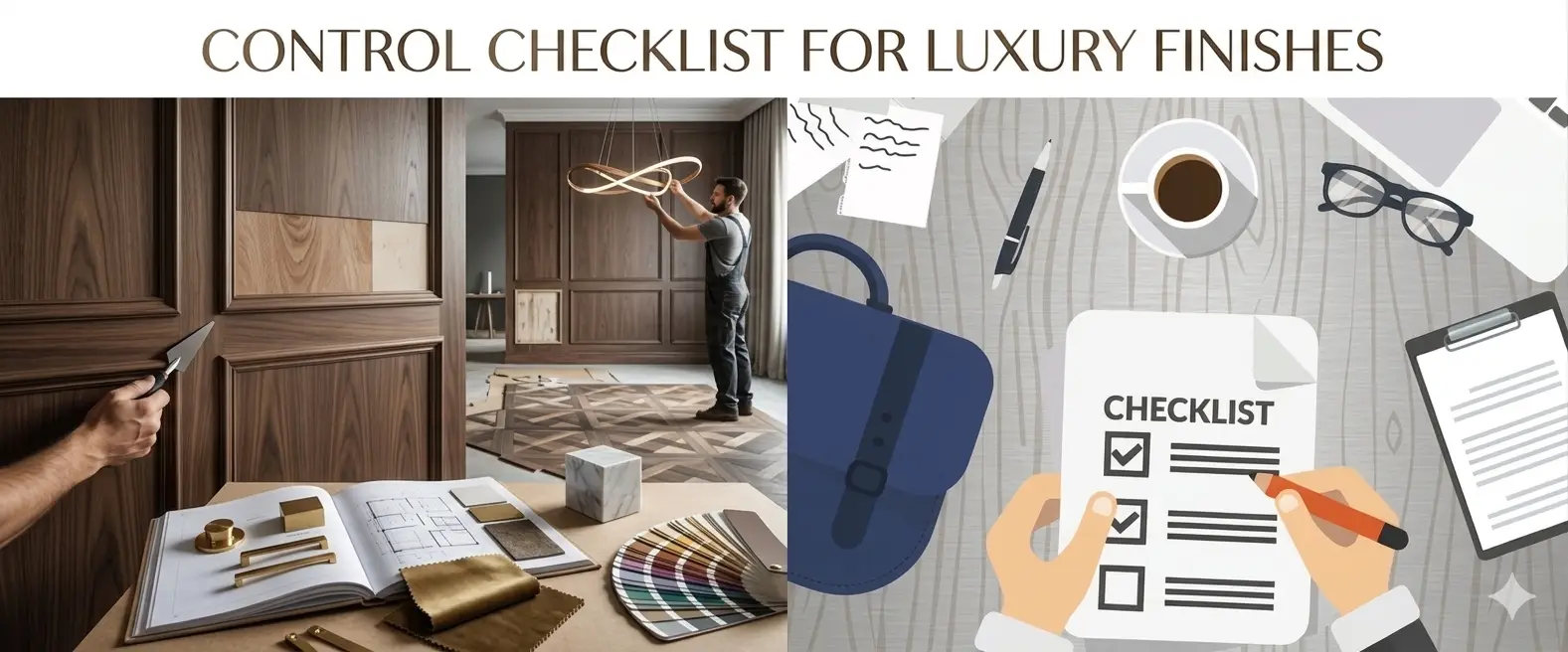
Luxury interiors are defined not only by visual elegance but also by precision, craftsmanship, and durability. While design concepts and premium materials contribute to a sophisticated space, the final quality of finishes determines whether the interior truly reflects luxury standards. Even a well-designed home can lose its impact if surface finishes, fixtures, or installations are not executed perfectly.
For private clients investing in premium interiors, implementing a structured luxury interior quality checklist and systematic snag list management is essential. These processes help identify minor defects, maintain consistency in finishes, and ensure that every detail aligns with the intended design vision. A professional quality inspection before project handover protects the value of your investment and ensures that the final space meets both aesthetic and functional expectations.
Below is a practical checklist used by experienced interior professionals to evaluate luxury finishes before completing an interior project.
Surface Finishes and Wall Quality
Walls and ceilings form the visual backdrop of any interior environment, making finishing accuracy extremely important in luxury homes. High-end interiors demand flawless paintwork, perfectly aligned wallpaper, and consistent textures that enhance the overall aesthetic.
During inspection, surfaces should appear smooth and uniform without roller marks, bubbles, uneven textures, or colour variations. Paint edges around ceilings, doors, and skirting boards must be sharp and clean. For wallpaper or textured finishes, patterns should align seamlessly, and edges should remain firmly attached to the wall.
Lighting plays a crucial role during quality checks. Artificial lighting often reveals imperfections that may not be visible under natural light. A detailed inspection as part of a luxury interior quality checklist ensures that wall finishes maintain a refined appearance while supporting effective snag list management before final handover.
Wall and Surface Inspection Checklist
| Inspection Area | What to Check | Quality Indicator |
|---|---|---|
| Paint Finish | Smooth and even coating | No streaks, bubbles, or patchy areas |
| Wallpaper / Texture | Proper alignment and adhesion | No visible joints or peeling edges |
| Corners and Edges | Clean paint lines | Sharp and consistent finishing |
| Ceiling Finish | Uniform paint or texture | No cracks or uneven surfaces |
Flooring Alignment and Material Finish
Flooring is one of the most noticeable elements in luxury interiors and significantly influences the perception of quality. Materials such as marble, engineered wood, natural stone, and large-format tiles require precise installation to achieve a seamless appearance.
During inspection, tiles or stone slabs should be level and evenly placed with minimal height variation between adjacent surfaces. Grout lines must remain uniform in width and colour, while edges and skirting should align neatly with surrounding walls.
Natural stone flooring requires additional attention to polishing consistency and surface protection. Proper inspection through snag list management ensures that flooring materials not only look elegant but also perform reliably over time.
Joinery, Cabinetry, and Custom Furniture
Luxury homes frequently incorporate bespoke joinery and custom-built furniture designed specifically for the space. These elements must demonstrate precision craftsmanship and functional efficiency.
Cabinet doors should align perfectly with equal spacing between panels. Drawers must open and close smoothly, and soft-close mechanisms should operate quietly without resistance. Internal surfaces inside wardrobes, kitchens, and storage units should also be finished to the same standard as external surfaces.
Material finishes such as veneer, laminates, or lacquer coatings must appear consistent without visible chips, gaps, or misaligned grain patterns. Much of this comes down to specifying the right surface in the first place, which is why it helps to understand the difference between veneer and laminate before finishes are frozen. A well-structured luxury interior quality checklist ensures that bespoke furniture reflects the high standards associated with luxury interiors while maintaining durability and functionality.
Hardware, Fixtures, and Lighting Precision
Small details often determine how refined an interior space feels. Hardware elements such as handles, hinges, locks, taps, and fittings should be carefully examined during quality inspection.
All fixtures must be securely installed and properly aligned with surrounding surfaces. Premium finishes like brushed brass, matte black, or stainless steel should appear uniform and free from scratches or tarnishing. Door handles, cabinet pulls, and drawer systems must function smoothly and silently.
Lighting installation is equally important. Recessed lights should sit flush with the ceiling, pendant fixtures must align symmetrically, and LED strip lighting should provide uniform illumination without dark patches. Through organised snag list management, professionals can resolve minor installation issues before final handover.
Fixture and Installation Quality Checklist
| Component | Inspection Focus | Expected Outcome |
|---|---|---|
| Cabinet Handles | Alignment and stability | Straight installation with a firm grip |
| Door Hinges | Smooth operation | Quiet and effortless movement |
| Light Fixtures | Placement and symmetry | Even spacing and flush installation |
| Electrical Switches | Functionality and finish | Proper working conditions and a clean fitting |
Stone, Countertops, and Premium Surface Materials
Luxury interiors often feature high-end materials such as marble, quartz, granite, or engineered stone. These surfaces require precise installation and careful finishing to maintain their visual appeal.
Countertops should have smooth edges, consistent polishing, and neatly finished joints. There should be no visible gaps where surfaces meet walls or cabinetry. For natural stone installations, sealing and edge protection should be verified to prevent staining or damage.
Professionals conducting snag list management also inspect backsplash alignment, corner detailing, and overall material consistency. Including these checks within a luxury interior quality checklist ensures that premium materials deliver both durability and aesthetic value.
Final Detailing and Cleanliness
The final stage of quality inspection focuses on detailing and finishing touches. Even small imperfections can reduce the perceived quality of luxury interiors.
Glass panels, mirrors, and metal surfaces should be spotless and free from scratches or smudges. Silicone joints around sinks, countertops, and bathroom fixtures must appear neat and uniform. Furniture surfaces should be cleaned and polished, and protective coverings removed carefully.
Once all items identified through snag list management are resolved, the space undergoes final cleaning and inspection before project handover. This step ensures that the home is delivered in flawless condition and ready for immediate use.
Why Snag List Management Matters in Luxury Interiors
Luxury interior projects involve multiple contractors, specialised materials, and complex installations. Without a structured inspection process, small defects may go unnoticed until after the homeowner moves in.
Effective snag list management provides a systematic approach to documenting, tracking, and resolving these issues before final project completion. When combined with a professional luxury interior quality checklist, it ensures that every element from surfaces to fixtures meets the highest standards of craftsmanship.
For private clients, this process guarantees that their luxury home reflects both design excellence and construction precision.