
Veneer or Laminate: Which One Should You Choose for Your Next Commercial Project?
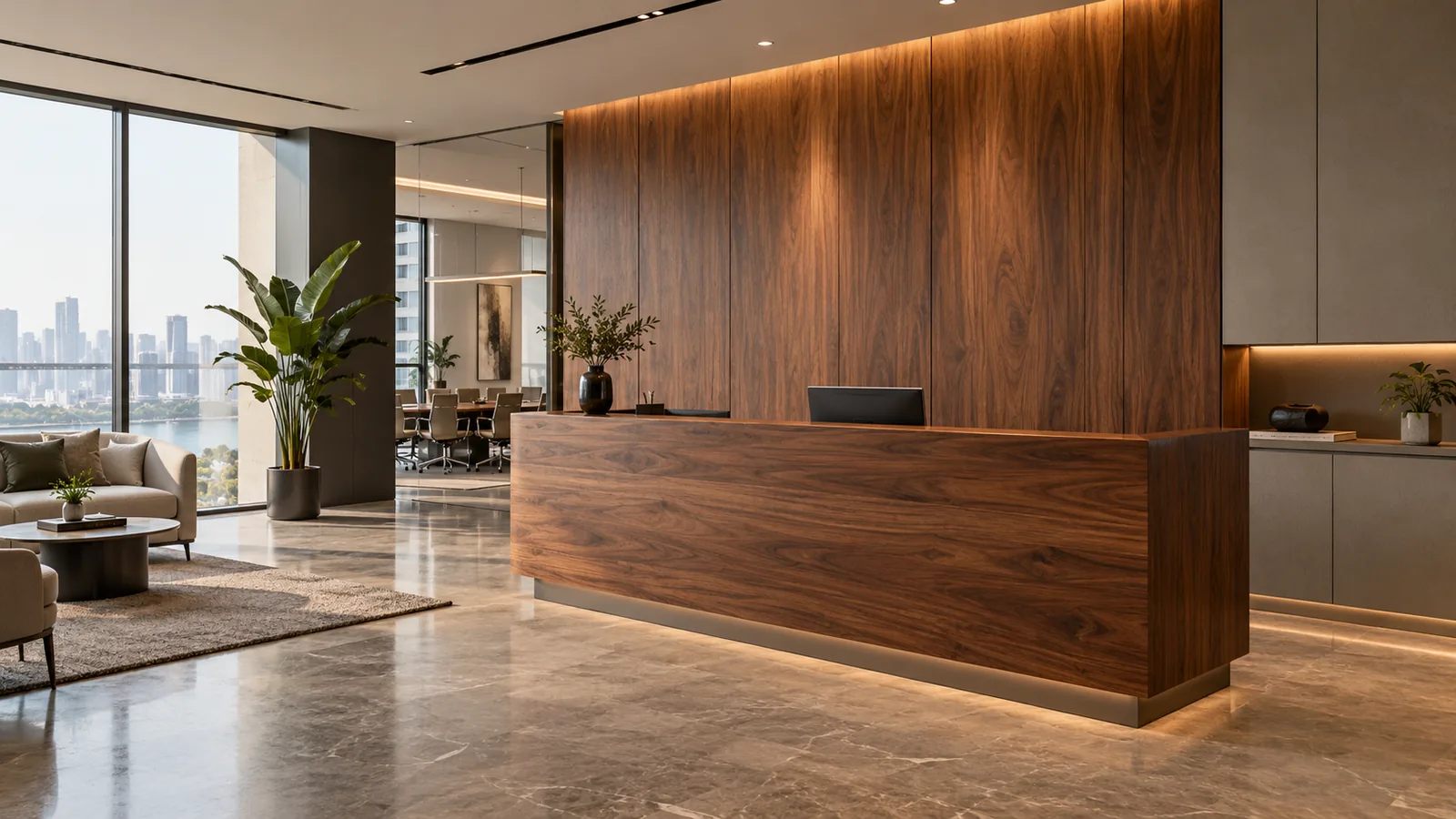
If you have ever sat across a designer with two sample boards on the table, one showing the grain of real wood and the other a flawless printed finish, you already know how confusing this decision can get.
Veneer or laminate is one of the most common questions we hear from clients planning office interiors, retail stores, hospitality spaces and healthcare facilities, and it comes up just as often for cabinets and furniture as it does for wall panelling.
The honest answer is that neither material is universally better. What works beautifully in a boutique hotel lobby can be the wrong choice for a hospital corridor that gets mopped with disinfectant twice a day.
This guide breaks down the real differences, the costs involved in the Indian market, and where each material actually makes sense, based on what we have seen across commercial fit-out projects.
Veneer vs Laminate: The Quick Answer
If you only have thirty seconds, here is the summary.
| Factor | Veneer | Laminate |
|---|---|---|
| Made from | Thin slices of real wood | Layers of paper and resin |
| Look | Natural wood grain, no two sheets alike | Printed designs, consistent pattern |
| Water resistance | Low to moderate | High |
| Durability in high traffic areas | Moderate, prone to scratches | High, resists wear and stains |
| Repair after damage | Can be sanded and repolished | Cannot be repaired, needs replacement |
| Cost | Higher | More economical |
| Best suited for | Executive cabins, hotel lobbies, boardroom panelling | Retail counters, kitchens, healthcare furniture, high footfall areas |
What Exactly Is Veneer?
Veneer is a thin layer of natural wood, usually between 0.5mm and 3mm thick, that is peeled or sliced from a log and then glued onto a base panel such as plywood, MDF or particle board.
Because it comes directly from a tree, every sheet carries its own grain pattern. This is the biggest reason architects specify veneer for spaces that need to feel warm, premium or high-end, such as reception counters, conference room walls and executive furniture.
There are two broad categories worth knowing:
- Natural wood veneer — sliced directly from timber species like teak, walnut, oak or ash. This is what most people mean when they say real wood veneer.
- Reconstituted or engineered veneer — made by dyeing and reassembling wood fibres to create a more uniform, repeatable grain pattern. This is often used when a project needs many panels to match exactly, which natural veneer struggles to guarantee.
Veneer can be stained to change its tone, and finished in either a matte or a gloss polish depending on the mood the space is going for.
What Exactly Is Laminate?
Laminate is a manufactured surface made by pressing together layers of kraft paper, a printed decorative layer, and a protective resin coat, all bonded under high heat and pressure. In India, many contractors and clients still refer to it by the older brand name Sunmica, though that is technically just one laminate manufacturer.
Laminates fall into two main grades:
- High Pressure Laminate (HPL) — thicker, more durable, and the standard choice for commercial furniture and cabinetry.
- Low Pressure Laminate (LPL) — thinner and less durable, typically used for lower-budget or less demanding applications.
Because the top layer is printed rather than natural, laminate can replicate almost anything, including wood grain, marble, fabric texture or solid colours, and every sheet in a batch looks identical. This consistency is exactly what large commercial rollouts need when multiple branches or floors have to match perfectly.
Difference Between Veneer and Laminate: The Factors That Actually Matter
1. Appearance and Brand Fit
Veneer gives depth and warmth that printed surfaces cannot fully replicate, which is why premium hospitality brands and corporate boardrooms often lean towards it for feature furniture and panelling.
Laminate, on the other hand, offers far more design flexibility. If a retail brand has a specific colour code or a textured finish in its brand guidelines, laminate can be manufactured to match it precisely across every counter and cabinet, something natural veneer cannot promise since wood grain varies sheet to sheet.
2. Durability Under Daily Use
This is where laminate usually wins for commercial spaces. High Pressure Laminate resists scratches, stains and minor impact far better than veneer, which is why it is the default choice for retail counters, healthcare furniture, and office workstation cabinets that get opened and closed dozens of times a day.
Veneer surfaces can develop scratches over time, and while they can be sanded and repolished, that means scheduling downtime for maintenance, which is rarely convenient in a running retail store or a hospital.
3. Moisture and Humidity
Mumbai's monsoon and coastal humidity are a real factor here. Veneer is not naturally waterproof and can lift or warp if moisture gets under the surface, so it needs a protective coating and should generally be avoided near washbasins, pantries or exterior-facing walls.
Laminate handles humidity and daily wiping far better, which makes it the safer default for kitchen cabinets, washroom cabinetry, and healthcare furniture where surfaces are cleaned frequently, often with disinfectant.
4. Cost Over the Project Lifecycle
Veneer costs more upfront because it uses an actual wood resource and needs skilled finishing. Laminate is more budget-friendly per square foot and, importantly, needs less maintenance spending over the years since it does not require periodic repolishing.
For large commercial rollouts covering multiple floors or branches, this maintenance saving often matters as much as the initial material cost, and it is worth modelling alongside the rest of your office fit-out cost before finishes are frozen.
5. Repairability
A scratched veneer surface can usually be sanded down and repolished to look new again, extending its life. A damaged laminate surface, once chipped or peeled, generally cannot be repaired invisibly and the panel needs to be replaced. This is worth factoring in for high-wear zones like reception desks or retail display counters.
6. Sustainability
Veneer, being a wood-based product, is a renewable material when sourced responsibly, and it produces a more premium look per unit of raw material compared to solid wood.
Laminate involves paper, resin and plastic layers, and while manufacturing has improved, it is generally considered less eco-friendly at end of life. If sustainability certification matters for your project (common in hospitality and corporate ESG-driven fit-outs), this is worth discussing with your interior contractor early.
Where Each Material Actually Makes Sense
Rather than picking one material for an entire project, most experienced contractors mix both, using each where its strengths apply.
Corporate offices
Use veneer for boardroom panelling, MD cabins and reception feature walls where a premium first impression matters. Use laminate for workstation cabinets, storage units and pantry cabinetry that see daily wear. This split is one of the first things we lock when planning a corporate office interior.
Retail fit-outs
Laminate is generally the safer choice for counters and cabinets across the board because of consistent branding requirements, fast rollout timelines across multiple stores, and heavy daily footfall. Veneer can be reserved for a signature accent wall or a premium product display zone. For brands rolling out across cities, that consistency is central to how a retail fit-out holds its standard store after store.
Hospitality projects
Hotel lobbies, restaurant feature walls and suite furniture often use veneer for warmth and character. Back-of-house areas, kitchens and washrooms should stick to laminate or waterproof alternatives. Getting that zoning right early is a recurring theme in hospitality interior projects.
Healthcare facilities
Laminate is almost always the better fit here because of frequent sanitisation, moisture exposure and the need for durable, easy-to-clean surfaces across nurse stations, cabinetry and furniture. These hygiene demands shape most material decisions in a healthcare interior fit-out.
Common Mistakes We See on Site
- Specifying veneer near wet areas without a proper waterproof melamine coating, leading to lifting within a year or two.
- Choosing laminate purely on price for a high-visibility brand zone, where the printed finish can look flat under certain lighting compared to natural veneer.
- Ignoring core material compatibility. Veneer and laminate both need a proper plywood or MDF substrate; using a low-grade core to cut costs often causes warping regardless of which surface finish is used.
- Not matching finish to footfall. A laminate rated for light residential use will not hold up in a high-footfall retail counter that gets touched hundreds of times a day.
- Skipping edge banding details. Exposed panel edges are where both veneer and laminate fail first if not properly sealed, especially in humid conditions.
Most of these are caught by a disciplined quality-control checklist at the snagging stage, long before the client ever sees the finish.
A Quick Checklist Before You Decide
- Will this surface be exposed to moisture, steam or frequent washing?
- Does the space need to match an exact brand colour or pattern across multiple locations?
- How much daily foot traffic or physical contact will this surface see?
- Is a long-term maintenance budget available, or does it need to be near-zero maintenance?
- Does the project have sustainability or green building certification requirements?
- Is this a feature area meant to create a premium first impression, or a functional, high-wear zone?
Working through these questions with your interior contractor at the design stage saves far more money than trying to fix the wrong finish two years into a lease. In practice, this checklist is the first conversation of a commercial turnkey interior and civil engagement, before a single sheet is ordered.
Planning a Commercial Fit-Out?
Choosing between veneer and laminate is easier when you have a contractor who has actually installed both across offices, retail stores, hotels and hospitals, not just sold you a sample board. If you are planning a commercial fit-out and want a material recommendation suited to your budget, footfall and timeline, get in touch with Civil & Interior Co. We will walk your project through the right finish for every zone, backed by execution experience across retail, hospitality, healthcare and corporate interiors, and held together by one accountable project management team.
Talk to Civil & Interior Co